
Understanding Emotions

The Foundation of Connection and Learning
Before a child can communicate with words, count to ten, or begin to read, they first need to understand what’s happening inside their body and mind. Emotional regulation, the ability to recognise, express, and manage feelings is the foundation upon which all other areas of development are built.
In Early Years and child development, we often talk about “school readiness” or “communication skills.” But truly, emotional readiness comes first. A regulated child is a connected child, and a connected child is ready to learn, communicate, and explore the world.
The Science Behind Feelings
From a psychology and neuroscience perspective, our emotions play a vital role in how we think, learn, and respond to the world around us. When a child feels calm, safe, and understood, their prefrontal cortex (the part of the brain responsible for decision-making and reasoning) can function effectively.
However, when a child is overwhelmed , scared, angry, sad, or anxious, their body enters a “fight, flight, or freeze” state. In that moment, the emotional brain takes over, and it’s very difficult for them to access language, problem-solving, or focus.
That’s why you might notice that children who are dysregulated often struggle with speech, listening, or following instructions. It’s not defiance or lack of understanding, it’s biology. Their brains are prioritising safety, not learning.
Regulation Before Communication
One of the most important principles in Early Years practice is “regulate, relate, then reason.”Before we can expect a child to talk about how they feel or understand instructions, we first need to help them feel safe and calm.

This might look like:
A comforting touch or soft voice
A sensory break or movement activity
Quiet time in a cosy corner
Breathing, music, or gentle rhythm play
Validation ie. “I can see you’re feeling sad,” or “It looks like you need some space”
By supporting children through emotional co-regulation, we’re teaching them to understand and label their feelings , the very first steps toward emotional literacy and communication.
Why Emotional Understanding Comes Before Academics
Learning isn’t just cognitive, it's emotional.
Children who can identify their feelings and manage them effectively are far better equipped to focus, problem-solve, and engage in learning tasks.
When emotional needs are ignored, frustration builds, concentration dips, and behaviour challenges often increase. But when emotions are acknowledged and explored, children develop empathy, confidence, and resilience, qualities that form the heart of lifelong learning.
Enter the Colour Monsters
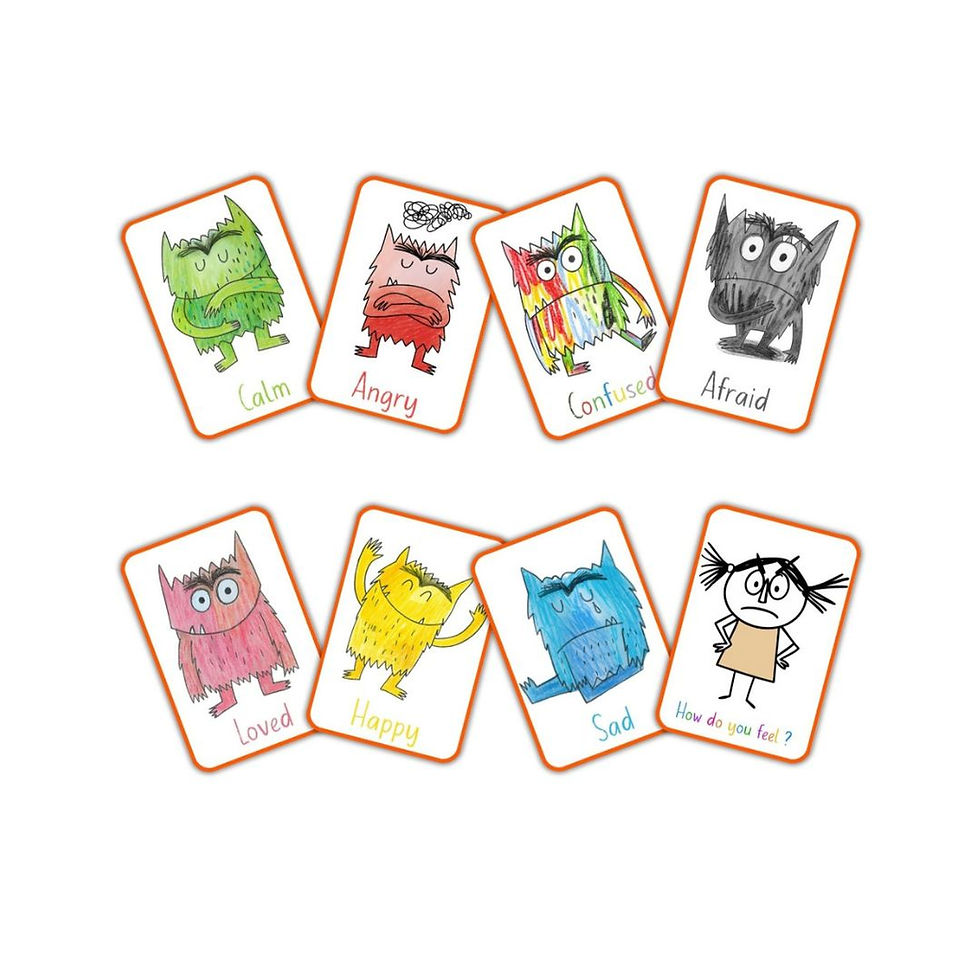
Many practitioners and parents have found a wonderful tool for supporting this journey in The Colour Monster by Anna Llenas, a beautiful story that helps children visualise emotions as colourful characters.
Each monster represents a different feeling, happiness, sadness, anger, fear, calm, and love, making emotions tangible and relatable for young children.
Using colour as a visual cue helps children connect physical sensations (“My tummy feels tight”) with emotional labels (“I think I’m angry”). This bridges the gap between the body and the brain, giving children a language for emotions even before they have the words.
Through stories, play, and colour-coded emotions, children learn that all feelings are okay, and that with support, they can recognise, manage, and express them safely.
Bringing Feelings to Life with Colour
Here at Sign and Bloom, We’ve developed a range of Colour Monster-inspired resources set to help children explore, express, and talk about their emotions in hands-on, engaging ways.
These printable resources include:
🎨 An Emotions Wheel (Feelings Spinner) — encouraging self-reflection and discussion
💛 Colour Sorting Cards — linking colours to feelings through visual matching
💬 Emotion Expression Activities — supporting communication through Makaton and play
🧩 Sensory and Regulation Prompts — helping children identify what helps them feel calm again

They’re perfect for classrooms, home learning, or therapy spaces , offering children the opportunity to see, name, and manage their emotions in a nurturing, accessible way.
Final Thoughts
When we nurture a child’s emotional world, everything else follows. Before literacy, before numeracy, before speech, comes connection.
A calm, regulated child feels safe to explore, communicate, and learn.
Let’s keep celebrating emotional awareness and giving children the tools to understand how they feel , because when we name our feelings, we can start to tame them.
✨ Explore our Colour Monster Resources here: Mindfulness

Comments